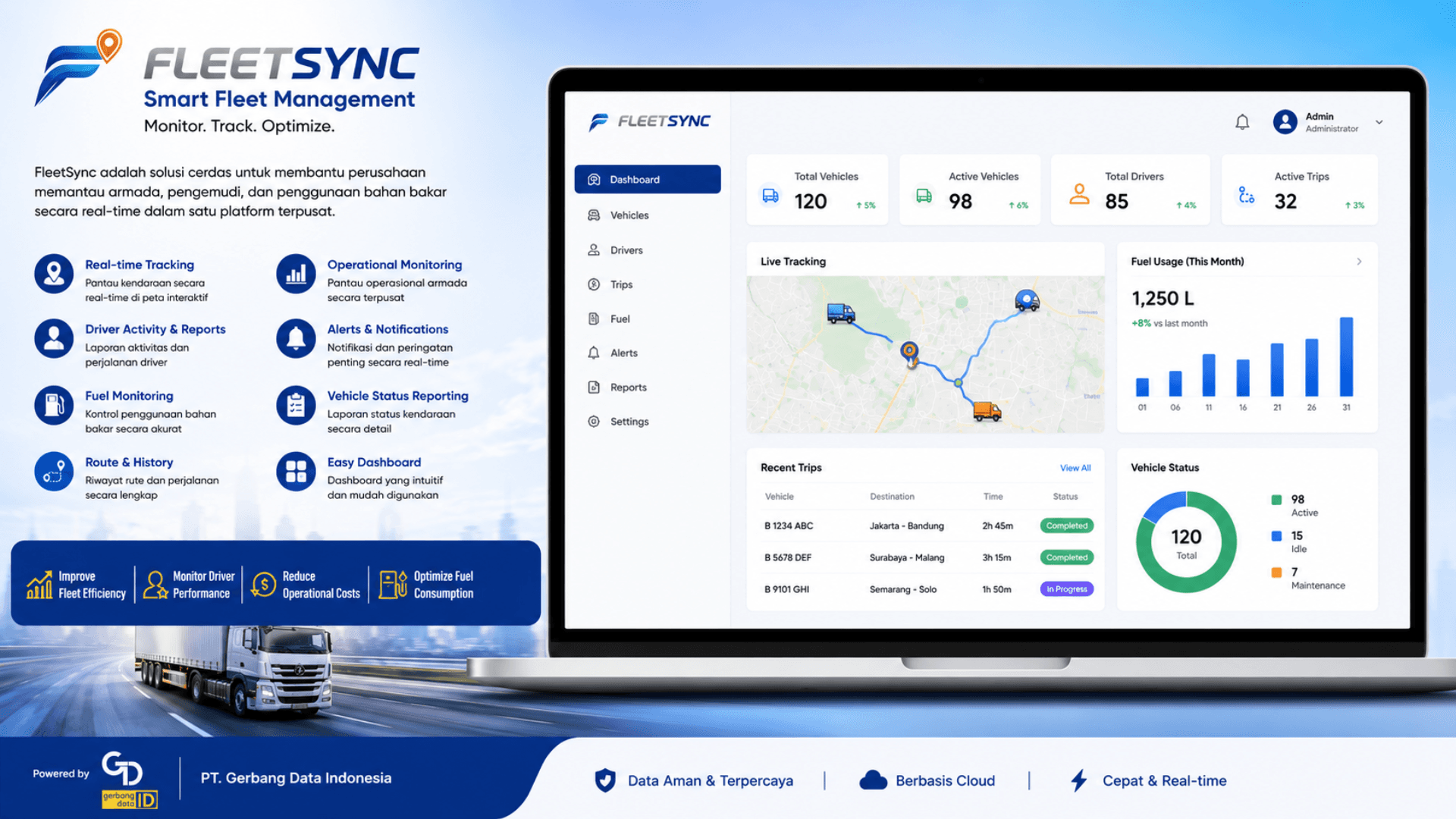
Fleet Tracking System
Web-Based Tugboat Monitoring Platform
Overview
The Fleet Tracking System is a web-based platform designed to help maritime and logistics companies monitor and manage tugboat activities through a centralized dashboard. The system provides real-time fleet visibility, trip and operational management, user access control, reporting, and AI-based people detection summaries.
Background
In maritime operations, visibility, coordination, and monitoring accuracy are critical for safety and efficiency. Manual monitoring processes can slow decision-making and make it difficult to track fleet activities consistently. This project addressed those challenges by creating an integrated operational platform for tugboat monitoring and management.
Goals
- 1Improve operational visibility through real-time tugboat tracking
- 2Centralize fleet, trip, jetty, and vehicle management
- 3Reduce manual monitoring and reporting processes
- 4Support faster decision-making for operational teams
- 5Provide role-based access for admins, drivers, and guest viewers
- 6Integrate AI detection summaries into the monitoring dashboard
Challenges
Real-Time Data Processing
Handling live tracking data required efficient backend architecture, reliable synchronization, optimized communication, and stable performance for operational datasets.
Complex Operational Workflow
Fleet operations involve connected modules such as trips, vehicles, users, jetties, and monitoring systems, requiring consistent data flow and maintainable business logic.
Dashboard Usability
The platform needed to present important operational data clearly so users could monitor activity, navigate modules, and make decisions quickly.
AI Monitoring Integration
The dashboard needed to display AI-generated people detection data as summaries, alerts, and reports while keeping the operational interface easy to understand.
Solutions
- Built a Laravel-based full-stack architecture for backend logic and frontend dashboard views
- Implemented centralized modules for trip, jetty, vehicle, user, and fleet operational data
- Designed role-based access management for admin, driver, and guest/user viewer roles
- Integrated real-time tracking data into dashboard monitoring workflows
- Created AI detection summary interfaces for reports, alerts, and activity visualization
- Structured dashboard pages to keep operational information clear and easy to scan
Key Features
Real-Time Fleet Tracking
Live tugboat position monitoring with movement history, route observation, operational activity updates, and dashboard-based fleet visibility.
Trip Management
Operational journey management covering trip scheduling, departure and arrival tracking, historical trip records, and route activity monitoring.
Jetty Management
Management tools for docking locations, operational destinations, jetty registration, and docking information configuration.
Vehicle Management
Centralized tugboat data management including fleet categorization, operational status monitoring, and vehicle assignment configuration.
Role-Based User Management
Access control for admin, driver, and guest/user viewer roles to improve security, accountability, and operational flexibility.
AI-Based Detection Summary
Dashboard integration for AI-generated people detection summaries, monitoring reports, alerts, and activity visualizations.
Impact & Results
Lessons Learned
- →Enterprise web applications require strong alignment between system architecture and real operational workflows
- →Real-time systems need careful data synchronization and performance-aware backend design
- →Operational dashboards must prioritize clarity, hierarchy, and fast scanning over visual complexity
- →Role-based access control is essential for platforms used by multiple operational user types
- →Cross-team collaboration is important when integrating external AI or monitoring services
- →Technology creates the most value when it improves visibility, coordination, and efficiency in real environments
Gallery
Interested in working together?
I am currently open to software engineering opportunities, enterprise platform developments, and technical consulting.